

Bondtalking
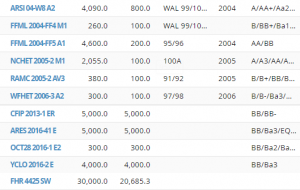 Lately it feels like the universe is getting smarter in realtime; Amazon’s Alexa and Apple’s Siri and Google (everywhere) seem to be anticipating our moves. So too with the bond market, where we find more and more sophisticated platforms helping traders make money. Finding a good “matcher” or “switch” opportunity is a particular kind of talking — Bondtalking. DealVector’s BondTalk manages fixed income data for ABS, CDO, CLO, RMBS, ABS, Corporates, Loans, and other markets.
Our English teachers taught us to use as few words as possible. So with BondTalk we streamline all the data for one bond that might be found in hundreds of different messages into a single short page. That way our users can see at a glance the summarized information most relevant to helping them trade.
In some ways the bond market seems like it would be easy to structure. There are defined fields that matter (coupon, yield, maturity, spread, etc.). But the formatting of informal messages can be tricky. Brokers try to be efficient in sending the least amount of information necessary to identify a bond, but this can lead to some interpretation challenges!
Sometimes a bond message will have a string of information following a name. Does an unlabeled “3.4” in isolation refer to a coupon, or a weighted average life, or a subordination percentage, or an auction date, or something else? Context matters.
Sometimes that minimal information is a Cusip, which is easy. But sometimes it is a string like “Amr ’24.” Is that a corporate ticker? Is it a structured deal name? Even the name might not be easy. Context matters.
Sometimes the partial information provided assumes information known elsewhere. “W.T.” for trade size means “whole tranche” … which is how much?? And what about a follow-up message that refers to an earlier email: “1/2 point better bid on the ’07s” – what are the 07s? Context matters.
Sometimes nice structured information is typed over, or pushed into weird line breaks by subsequent additions. Sometimes the fields are scrunched together with no line breaks at all so that a single string has to be smartly parsed.: is “JFIL 2006-1 AAA” a triple-A bond or is it a double-A “A” tranche? Context matters.
What is remarkable is that systems are becoming smart enough to interpret ambiguous information as well as we do. Perhaps soon we won’t need people at all for Bond Talking.
